
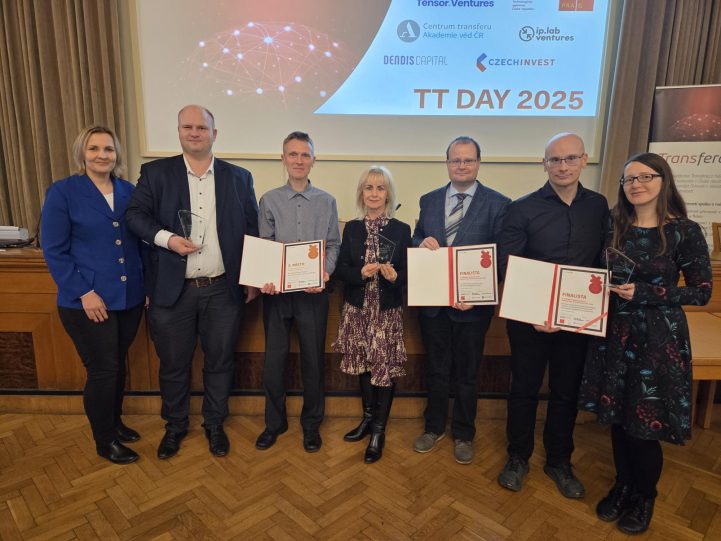
The technology of more environmentally friendly gelatin from chickens from Tomas Bata University in Zlín won third place in the prestigious Transfera Technology Day 2025 competition
15. December 2025The technology of more environmentally friendly gelatin from chickens won third place in the final of the prestigious Transfera Technology Day 2025 competition. Along with it, the application “FLAPRIS – a smart helper not only in the threat of flash floods” from the Faculty of Applied Informatics (FAI) and the technology “Efficient and ecological production of advanced conductive and non-toxic (bio)materials and composites based on polypyrrole” from the Center for Polymer Systems (CPS) of TBU in Zlín from Tomas Bata University (UTB) also advanced to the finals. Both technologies received the award of FINALIST OF TRANSFERA TECHNOLOGY DAY 2025, which is a sign of quality and will help with application in practice. In total, six other extraordinary projects from Czech universities and research institutions also made it to the finals of the competition. Their authors presented them on Tuesday, December 9, 2025 at the premises of the Academy of Sciences of the Czech Republic in Prague.
More environmentally friendly chicken gelatin? New technology changes the rules of the game
At a time when the emphasis on sustainability and reducing food waste is growing, the food industry is coming up with an innovation: chicken gelatin. It is made from parts of chickens that would otherwise end up as waste – skin, bones, cartilage – and it is rich in collagen, important for healthy joints, skin and hair. It is obtained by long cooking, during which the collagen is released into the liquid and solidifies after cooling.
While these parts were previously used mainly in animal feed, today they are creating the basis for new products – from protein supplements to alternatives to classic gelatin. This trend fits into the “nose-to-tail” philosophy, which promotes the full use of the animal body and the reduction of waste. Chicken gelatin can therefore be the next steptowards a more sustainable diet.”This method is not only more environmentally friendly, but also more efficient. More gelatin is obtained from one batch of raw material, and, moreover, of high quality. Chicken gelatin produced in this way has a high gel strength (up to 300 Bloom) and a low ash content (less than 2%) – which also meets the strict requirements of the pharmaceutical and food industries,” says project researcher Pavel Mokrejš from TBU.
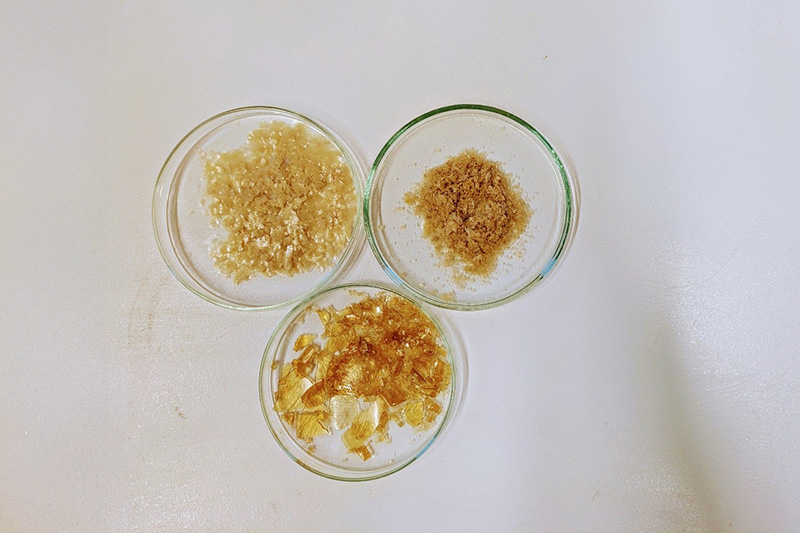
In addition, the technology allows for so-called fractional processing – at lower temperatures, the highest quality gelatin is produced, and at higher temperatures, the rest of the raw material is further processed. Thanks to this, almost everything that would otherwise end up as waste is utilized. Chicken gelatin is of particular importance in countries where Halal and Kosher certifications are required – here it can replace pork gelatin. It is also a suitable alternative for consumers who refuse beef products for religious reasons, for example in Hindu communities. Global consumption of gelatin is constantly growing – by approximately 20% over the last 6 years. With this, interest in gelatins from sources other than mammalian sources is also growing. Consumers from Islamic, Jewish and Hindu countries make up a significant part of the market, which has a direct impact on production volumes.
The event is organized by the Transfera.cz association, which supports the connection of research organizations with the commercial sector. 18 technologies from 13 scientific, research and academic institutions have applied for this year’s Transfera Technology Day. “After evaluation by the expert jury and evaluators, a total of 9 technologies from 6 institutions were presented today, three of which were from Tomas Bata University in Zlín,” said Ivana Bartoníková, director of the Technology Transfer Center (CTT) of TBU in Zlín.
“The technology awarded third place is protected by patent number 307665 valid in the Czech Republic and also by European patent number 3707215, which was granted this year,” said Přemysl Strážnický from the Technology Transfer Center of TBU in Zlín, a specialist in industrial property protection and technology transfer.
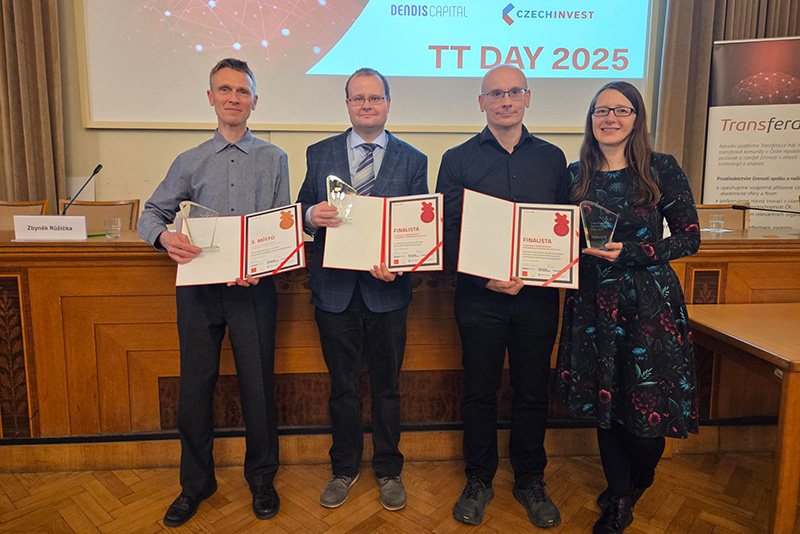
The winner was the Unique Cooling System for Machine Tools from the University of West Bohemia in Pilsen,
the second place went to the project of the Institute of Chemical Processes of the Academy of Sciences of the Czech Republic which was entitled Highly selective galectin-1 inhibitors for the treatment of triple-negative breast cancer.
In addition to the prestigious award, the three best-rated projects also received expert consultations from the event partners and gained also the production of a professional video that will help them in further communication with investors and industrial partners.
Transfera Technology Day 2025 is intended for representatives of companies looking for new technologies and innovations, investors, representatives of state administration and the media with an interest in technology transfer and the development of the Czech innovation ecosystem. The Transfera.cz association is organizing the event for the sixth time; in previous years, it has helped many of projects to establish cooperation with investors and launch the creation of spin-offs and start-up companies.